Toll-Free vs Local vs Mobile Numbers
Toll-free vs local vs mobile numbers compared: US prefixes, area codes, A2P/10DLC, SMS deliverability, cost, caller perception, and when to use each type.
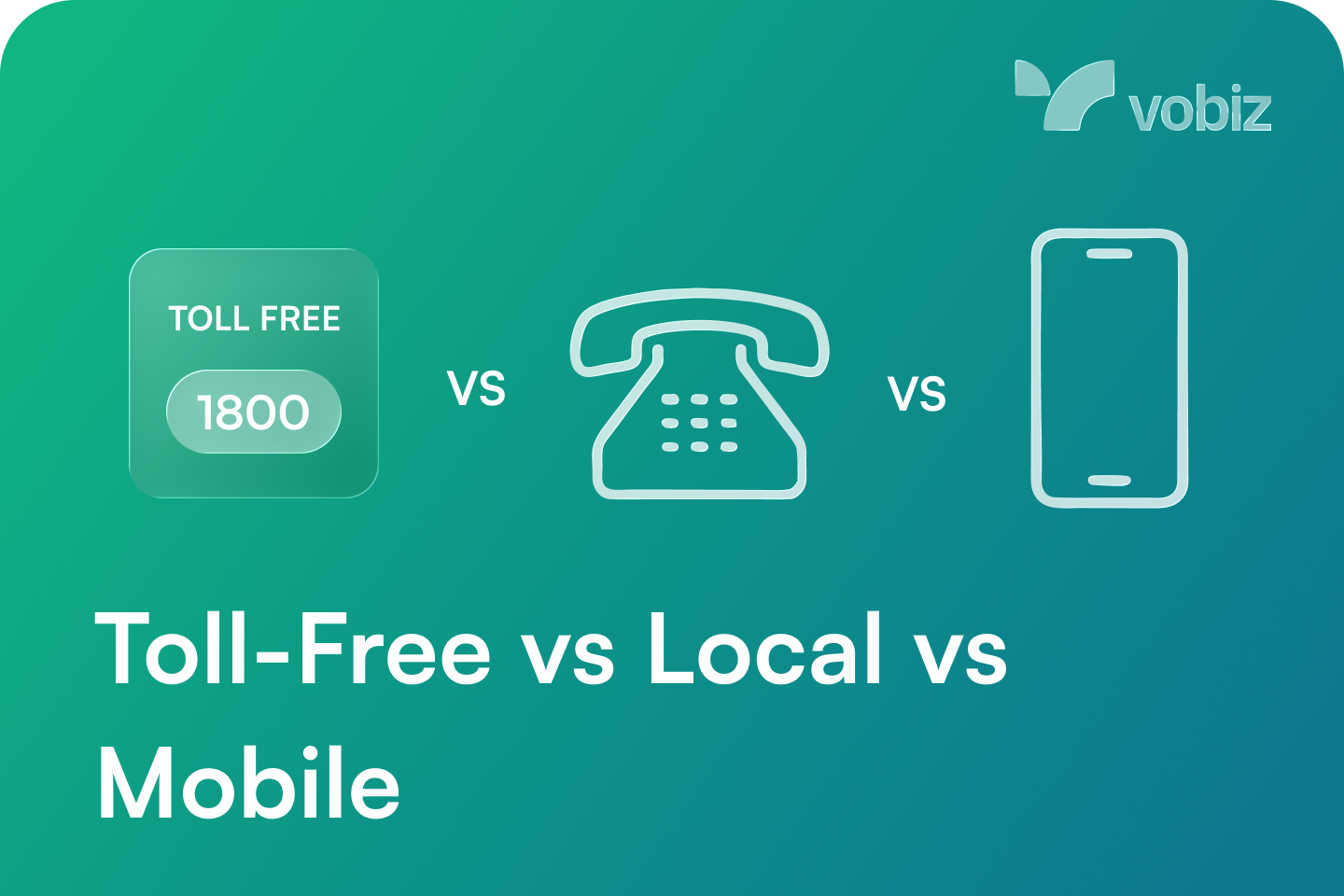
The choice between toll-free vs local (and, increasingly, mobile) numbers shapes how customers perceive your business, who pays for the call, and whether your texts even get delivered. These are the three types of phone numbers most US businesses pick between when they stand up a phone line, a contact center, or a voice AI agent, and they are not interchangeable. A toll-free number signals national scale and shifts call costs to you. A local number reads as a real neighbor and lifts answer rates. A mobile number is what your customers carry in their pocket, and in the US it is governed by a completely different messaging rulebook.
This guide goes past the marketing copy: the exact US toll-free prefixes (800/888/877/866/855/844/833), how NPA-NXX area codes encode local presence, why the US has no distinct "mobile" prefix, how A2P/10DLC and toll-free verification gate SMS deliverability, a 14-row comparison table, decision rules for each use case, and how a programmable telephony layer like Vobiz provisions all three.
Note
Key takeaways
- Toll-free numbers (US prefixes 800, 888, 877, 866, 855, 844, 833) are free to the caller because the receiving business pays; they signal national, established scale.
- Local numbers are tied to a geographic area code (NPA-NXX) and read as a real neighbor, which measurably lifts outbound answer rates.
- The US has no distinct mobile prefix - a mobile number looks like any local 10-digit number; what differs is A2P/10DLC registration for business texting and reliable handset reachability.
- For SMS deliverability, the type matters: toll-free needs toll-free verification, local/mobile business texting needs 10DLC registration, and short codes are a separate high-throughput lane.
- With Vobiz you provision local, mobile, and toll-free numbers from one API at a flat ₹0.65/min both ways and point them at any voice AI stack (Vapi, Retell, ElevenLabs, Pipecat, LiveKit).
A toll-free telephone number is a number that is free for the caller to dial - because the business that owns it pays for the inbound call instead. The defining mechanic is the reversed billing: on the legacy network this was "inbound WATS," and the principle survives today. As the encyclopedic reference on the North American Numbering Plan notes, "calls to the toll-free numbers are charged to the receiving party, and are free to the caller if dialed from land-line telephones, but may incur mobile airtime charges for cellular service."
In the US and the rest of the North American Numbering Plan, toll-free numbers are identified by a fixed set of 3-digit prefixes that sit where an area code normally would:
| Prefix | Status |
|---|---|
| 800 | The original toll-free code (in service since the 1960s) |
| 888 | Active |
| 877 | Active |
| 866 | Active |
| 855 | Active |
| 844 | Active |
| 833 | Active (most recently opened) |
Future codes - 822, 880–887, and 889 - are reserved for toll-free use but not yet in general circulation. Note that 888, 877, 866, etc. are not interchangeable with 800: 1-800-555-0100 and 1-888-555-0100 are different numbers that may belong to different owners.
How they are assigned. Toll-free numbers are not "bought" like a domain; they are administered through a shared registry. A Responsible Organization (RespOrg) reserves and points each number in the SMS/800 database, the central system overseen under FCC contract. The registry is run today by Somos, the official toll-free numbering administrator. This is why a provider effectively acts as your RespOrg when you order a toll-free number.
Vanity numbers. Because toll-free prefixes are memorable, businesses often pay for a vanity number that spells a word on the keypad (1-800-FLOWERS). Vanity numbers are a marketing asset: easier to recall on radio, billboards, and packaging, at the cost of limited availability.
Toll-free is not a feature of one country. Other countries have their own freephone ranges (the UK's 0800, India's 1800 series), and there is even a Universal International Freephone Number (UIFN) scheme for a single number that works across participating countries. This guide focuses on the US/NANP system.
What is a local number?
A local number is a standard geographic number tied to a specific city or region through its area code. In the North American Numbering Plan, every 10-digit number follows the NPA-NXX-XXXX structure:
- NPA - the 3-digit Numbering Plan Area, i.e. the area code (212 for Manhattan, 415 for San Francisco, 312 for Chicago).
- NXX - the 3-digit central office / exchange code, historically the local switch serving a neighborhood.
- XXXX - the 4-digit subscriber number that identifies the specific line.
The whole address scheme rolls up into the global E.164 standard, where a US number becomes +1 (country code) followed by the 10 NANP digits.
The strategic value of a local number is local presence. When you call someone from a number that shares their area code, the call reads as a neighbor rather than an unknown national entity. In outbound and contact-center work this is a real, measurable effect: matching the recipient's area code lifts answer and pickup rates compared with an unfamiliar or out-of-region number. That's why a realtor, a clinic, or a regional sales team will deliberately use a number in the same area code as the customers they serve.
Local numbers are not limited to one location. Cloud telephony decouples the number from a physical exchange, so a single business can hold local numbers in dozens of area codes - a "virtual local presence" in every market it sells into - without an office in any of them. You provision them from inventory the same way you would any number; with Vobiz you purchase a local number from inventory and assign it to an application in minutes.
What is a mobile number?
Here is the fact that trips up most people coming from outside the US: the United States has no distinct mobile-number prefix. Unlike India (where mobile numbers start with a 6–9 series) or the UK (07…), a US mobile number is drawn from the same NPA-NXX geographic pool as a landline or VoIP number. You generally cannot tell from the digits alone whether +1 415 555 0100 rings a desk phone, a cell phone, or a cloud number. This is a consequence of number portability: a subscriber can carry a number from a landline carrier to a mobile carrier and back.
So what does "mobile number" actually mean operationally in the US? Two things:
- Handset reachability. A mobile number terminates on a smartphone the customer carries, so it is reachable anywhere with coverage - ideal for two-way conversations, missed-call return, and SMS/RCS that the person reads within minutes.
- A2P / 10DLC for business texting. When a business (an Application) sends SMS to people (Person) over an ordinary local/mobile-style 10-digit number, US carriers require the traffic to run on 10DLC - Application-to-Person 10-Digit Long Code. To send A2P traffic you must register your brand and each campaign with The Campaign Registry; only then do carriers grant the throughput and protect deliverability. Unregistered A2P traffic over a long code is increasingly filtered or blocked.
This A2P regime is why "which number type can I text from?" has a non-obvious answer in the US - it depends less on the digits and more on registration:
- Local / mobile-style long codes → business texting requires 10DLC registration (brand + campaign vetting). Best for conversational, locally branded messaging.
- Toll-free numbers → can send SMS, but require separate toll-free verification to reach full carrier deliverability. Good for nationwide, mid-volume A2P.
- Short codes → a dedicated 5–6 digit number purpose-built for the highest SMS throughput (think bank OTP at scale); not tied to an area code, voice-incapable, and the most expensive/slowest to provision.
Mobile reachability and the A2P rulebook are exactly why message-heavy fintech and commerce flows live or die on getting the number type and its registration right.
| Dimension | Toll-free | Local | Mobile (US) |
|---|---|---|---|
| US identifier | 800/888/877/866/855/844/833 prefix | Geographic area code (NPA-NXX) | No distinct prefix - looks like a local 10-digit number |
| Who pays for the call | The business (receiving party) | The caller (standard rates) | The caller / their plan |
| Caller perception | National, established, "real company" | Local neighbor, regional trust | Personal, immediate |
| Best for inbound | Nationwide support / sales lines | Region-specific service | Direct two-way contact |
| Outbound answer rate | Lower (reads as marketing) | Higher (area-code match) | High (personal) |
| Geographic tie | None (national) | Tied to an area code | None (portable) |
| SMS capable | Yes (with toll-free verification) | Yes (with 10DLC registration) | Yes (with 10DLC registration) |
| A2P registration | Toll-free verification | 10DLC (brand + campaign) | 10DLC (brand + campaign) |
| Vanity option | Yes (1-800-FLOWERS) | Limited | No |
| Coverage | National + some international freephone | One region (provision many for multi-market) | National |
| Provisioning | RespOrg / registry-administered | From inventory, instant | From inventory, instant |
| Voice AI fit | National IVR & support agents | Local-presence outbound agents | Personal reminders / follow-ups |
| Typical use case | Customer service hotlines | Field sales, clinics, local CX | OTP, alerts, conversational SMS |
| One non-obvious gotcha | Calls from cell phones may use the caller's airtime | Number ≠ physical office; register E911 address | Digits don't reveal it's mobile |
Use a toll-free number when…
You want a single national line that signals scale and removes any cost barrier to the customer. Toll-free is the classic choice for support and sales hotlines printed on packaging, websites, and ads, especially for a brand selling across the whole country. It is also the right pick when you want a memorable vanity number for offline marketing. The trade-offs: callers increasingly recognize toll-free as "a company line" (which can lower outbound answer rates), and the cost of the call sits with you.
Use a local number when…
You are doing region-specific work or outbound calling where pickup rate matters. A local number that matches the recipient's area code reads as a neighbor and consistently out-answers a toll-free or unknown number, the reason field sales, recruiting, clinics, and local service businesses lean local. It is also right when you want to project presence in multiple markets: provision a local number per metro and route them all into one voice application. For business SMS from a local number, plan for 10DLC registration up front.
Use a mobile-style number / mobile reachability when…
Your value is in two-way, conversational contact a person will pick up or read on their phone, OTP delivery, appointment reminders, delivery updates, and conversational SMS. In the US this is a local 10-digit number on a 10DLC campaign; the "mobile" part is about reachability and texting behavior, not the prefix. If you need very high SMS throughput (large OTP or alert volumes), evaluate a short code instead of a single long code.
Use more than one (the realistic answer)
Most serious deployments use a mix: a toll-free main line for national inbound, a bank of local numbers for outbound presence per region, and 10DLC-registered numbers for the SMS layer. The point of a programmable platform is that you can hold all three behind one API and one set of routing rules.
How Vobiz handles numbers
Vobiz is telephony infrastructure - the programmable rails under your phone system or voice AI agent, not an agent or CX suite itself. It powers voice-AI builders (Vapi, Retell AI, ElevenLabs, Pipecat, LiveKit) and runs the numbers, SIP, and Voice API beneath them. On number types specifically:
- All number types from one API. Provision local, mobile, toll-free, and enterprise numbers through a unified phone-number API - browse inventory and purchase from inventory - instead of separate workflows per type.
- Instant, self-serve provisioning. Numbers, DIDs, and APIs are provisioned in minutes via eKYC, not the 4–8 weeks of paperwork legacy carriers require. DID provisioning in 130+ countries; outbound connectivity to 190+ countries.
- Flat, symmetric pricing. A single ₹0.65/min (65 paise) rate for both inbound and outbound - no inbound/outbound asymmetry - with enterprise pricing above ~50,000 minutes/month.
- Built for voice AI. Point any number at a voice application over SIP or WebSocket with sub-80 ms single-hop latency, barge-in, bidirectional streaming, and outbound L16 playback at up to 24 kHz.
- Programmable routing on every number. Layer IVR, call transfer, recording, and dynamic routing through the Voice API regardless of whether the number is toll-free, local, or mobile.
- Reliable at scale. 99.99% uptime, 4.2+ MOS, with SRTP/TLS 1.3 encryption - the same rails that fintechs like Razorpay and Acko, enterprises like KPMG, and voice-AI builders like Bolna run on.
A toll-free hotline, a fleet of local outbound numbers, and a 10DLC texting layer can all live behind the same Vobiz account and routing logic.
Frequently asked questions
Neither is universally better - it depends on direction and intent. Toll-free is better for a single national inbound hotline that signals scale and removes the caller's cost. Local is better for region-specific service and for outbound calling, where an area-code match lifts answer rates. Many businesses use both.
What are the US toll-free prefixes?
The active US toll-free prefixes are 800, 888, 877, 866, 855, 844, and 833. They are not interchangeable: 1-800 and 1-888 versions of the same digits are different numbers. Codes like 822, 880–887, and 889 are reserved for future toll-free use.
Can you tell if a US number is a mobile number?
Usually not from the digits alone. The US has no distinct mobile prefix - mobile, landline, and VoIP numbers all come from the same geographic NPA-NXX pool, and numbers can be ported between line types. You need a carrier/HLR lookup to determine the current line type.
Which number type can I send business SMS from?
All three can send SMS, but with different rules. Local and mobile-style long codes require 10DLC brand + campaign registration. Toll-free numbers require separate toll-free verification. For the highest throughput, a dedicated short code is a separate option. Registration, not the prefix, is what gates deliverability.
Who pays for a toll-free call?
The business that owns the toll-free number pays for the inbound call, which is why it's free to the caller. Note that calls placed from a mobile phone may still consume the caller's plan minutes even though no separate long-distance charge applies.
Do local numbers work for a business in multiple cities?
Yes. Cloud telephony decouples a number from a physical exchange, so you can hold local numbers in many area codes at once and route them all into one application - a virtual local presence in every market without a physical office there.
Further reading on Vobiz
- What is a landline number? · What is a Voice API? · What is VoIP?
- Phone numbers overview · Purchase a number from inventory · List inventory numbers
- Voice platform overview · SIP trunking overview · Vobiz introduction
Sources
- Wikipedia, "Toll-free telephone number".
- Wikipedia, "Toll-free telephone numbers in the North American Numbering Plan".
- Wikipedia, "North American Numbering Plan".
- Wikipedia, "E.164".
- Somos, "Toll-Free numbering administrator".
More Related Articles
What is a DID number?
A DID number is a phone number that routes straight to a specific endpoint. How direct inward dialing works, DID types, porting, and DID vs virtual numbers.
Read full article Piyush Sahoo
What is a virtual phone number?
A virtual phone number is a real number not tied to a SIM or copper line. How it works, the types, virtual vs DID vs landline, and the voice-AI angle.
Read full articlePiyush Sahoo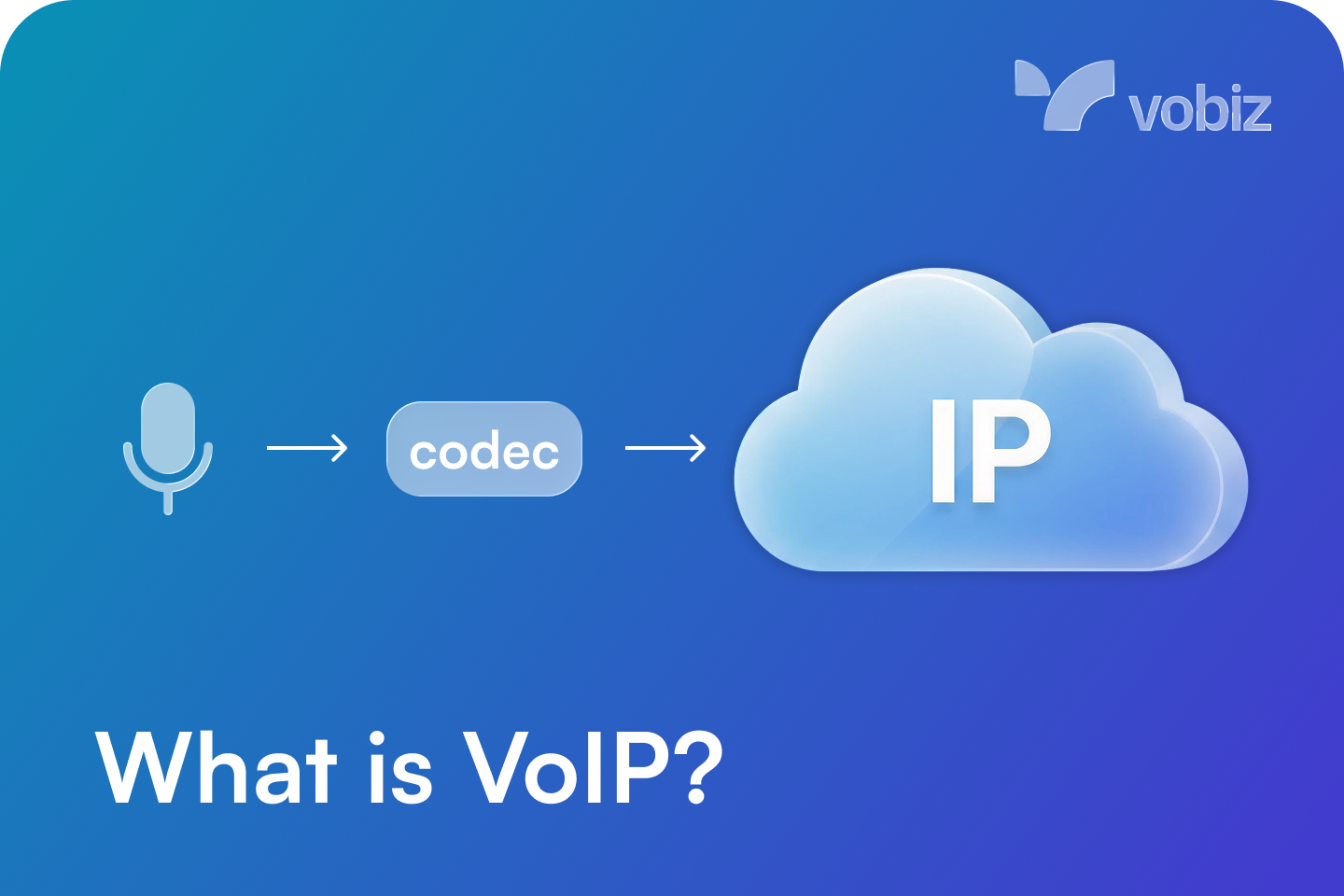
What is VoIP?
VoIP turns phone calls into internet data. How it works (codecs, SIP, RTP), the types of VoIP, equipment, bandwidth, call quality, costs, and setup.
Read full articlePiyush Sahoo