Architecting Ultra-Low Latency Voice AI Agents in India: A Deep Dive into the Vobiz and Vapi Integration
Architecting Ultra-Low Latency Voice AI Agents in India: A Deep Dive into the Vobiz and Vapi Integration
The Telephony Bottleneck in Voice AI
The paradigm of human-computer interaction is shifting toward Voice User Interfaces. The underlying AI models—handling Speech-to-Text, Large Language Model inference, and Text-to-Speech generation—have become incredibly fast. However, developers targeting the Indian market face a stark reality: connecting these fast AI models to the traditional phone network (PSTN) often ruins the user experience.
The core issue is latency. Human conversational turn-taking happens in gaps of roughly 200 to 500 milliseconds. If the network routing between the AI provider and the telephony carrier adds a second of delay, the user will assume the system is broken.
Today, we are examining the official integration between Vobiz (a premier telephony and SIP trunking provider in India) and Vapi (a leading platform for building and deploying Voice AI agents). This integration is specifically designed to optimize the network traversal segment of the latency budget, allowing developers to deploy AI agents on real Indian phone numbers in under five minutes.
Understanding the SIP Integration Layer
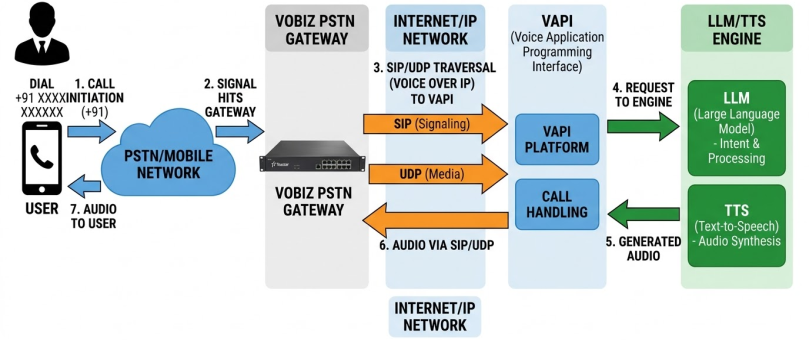
To understand why this integration is highly performant, we must look at the Session Initiation Protocol (SIP). SIP is the signaling protocol used to initiate and terminate real-time voice sessions.
When you connect Vobiz and Vapi, you are establishing a virtual SIP Trunk. Vobiz acts as the Carrier, interfacing with the physical telecom grid in India. Vapi acts as the SIP Endpoint, receiving the audio payload via Real-time Transport Protocol (RTP) and processing it through the AI stack.
To eliminate latency, this integration mandates the use of User Datagram Protocol (UDP) over Port 5060 for SIP signaling. Unlike Transmission Control Protocol (TCP), UDP simply fires the data packets. In real-time voice applications, a dropped packet is vastly preferable to the severe latency introduced by TCP retransmission.
Step-by-Step Configuration: Outbound Calling
To configure your Vapi agent to initiate calls to Indian phone numbers, follow these steps to establish the outbound SIP trunk.
- 1. Prepare the Vapi Endpoint — Navigate to the Vapi dashboard, select integrations, and create a new SIP Trunk.
- 2. Configure the Vobiz Carrier — Log into your Vobiz console, create a Credential List with a username and secure password, then create a new Outbound Trunk.
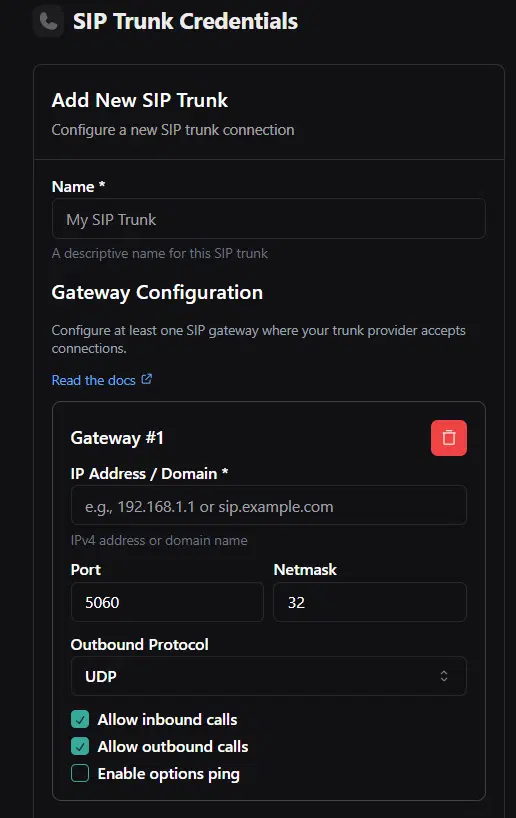
- 3. Establish the Connection — Input the Vobiz SIP Domain in Vapi, set port to 5060, select UDP as transport, and input your credentials. Vobiz will issue digest authentication challenges.
4. Assign the Caller ID — Purchase a local Indian DID number from Vobiz, go to Vapi, select "Bring Your Own SIP Trunk Number," and paste the number in E.164 format. Your agent is ready to make outbound calls.
Step-by-Step Configuration: Inbound Calling
Configuring the system to handle incoming calls from customers is slightly more complex, as Vobiz needs explicit instructions on exactly which Vapi agent should receive the call.
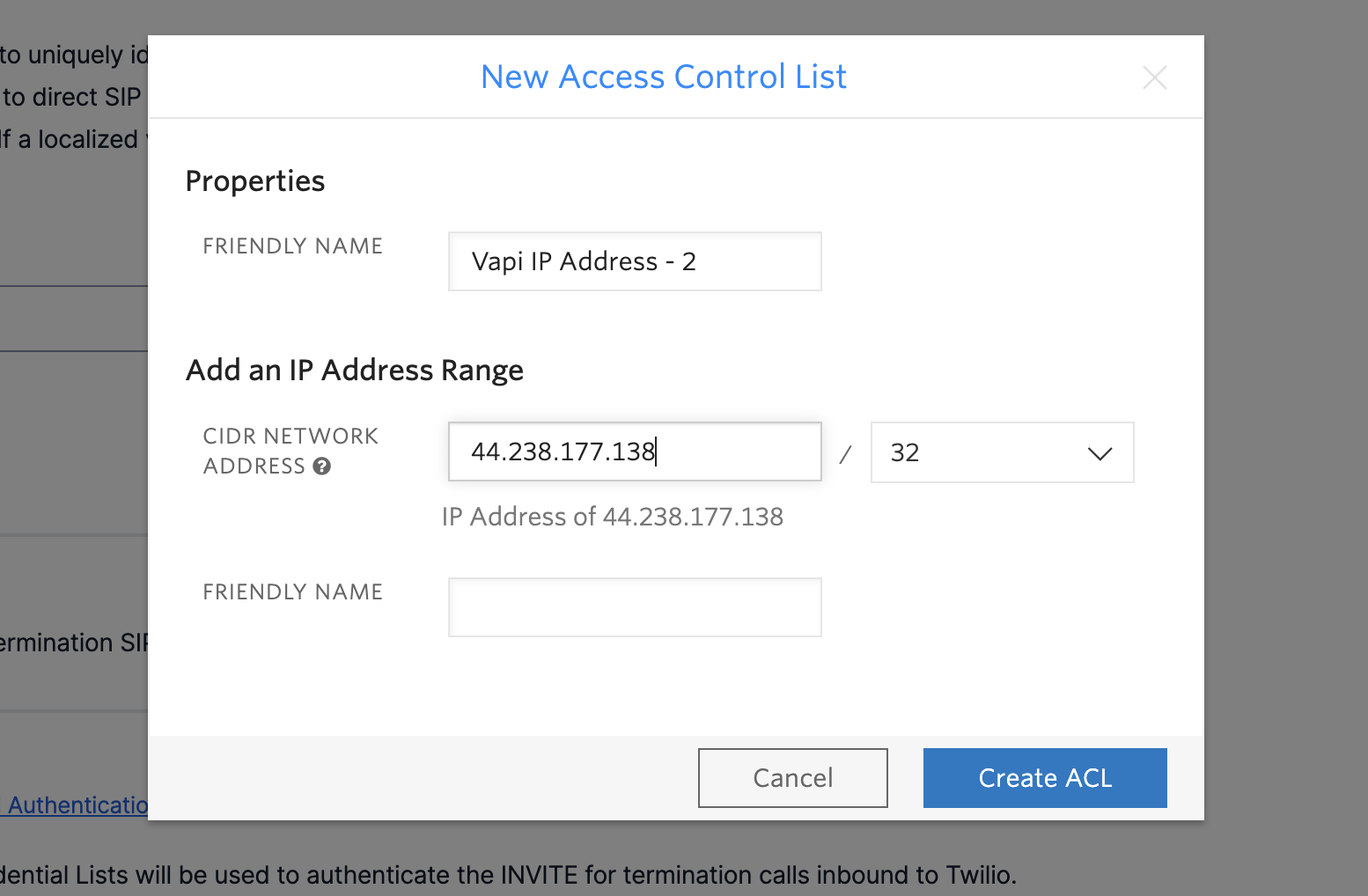
1. Gateway IP Whitelisting — In the Vapi dashboard, create an Inbound SIP trunk. Input the Vobiz Gateway IP address into Vapi to whitelist it.
2. Fetching the Trunk UUID via API — Use a REST API client to GET your trunk ID:
curl -X GET "https://api.vapi.ai/sip-trunk" \
    -H "Authorization: Bearer YOUR_VAPI_API_KEY"
3. Constructing the Primary URI in Vobiz — Create an Inbound Trunk in Vobiz and set the Primary URI: [Your_Trunk_UUID].sip.vapi.ai. Set transport to UDP.
4. Final Number Assignment — Link your phone number to the inbound trunk in Vobiz, then assign your AI assistant to the number in Vapi. The bidirectional loop is complete.
Designing the Application Layer
With the telephony infrastructure abstracted and optimized, engineering teams can dedicate their resources to the conversational experience. This integration opens up several enterprise-grade use cases:
- Real-Time Lead Qualification: Trigger outbound webhooks from your CRM the moment a user submits a form. The Vapi agent calls the user via Vobiz within seconds.
- Scalable Tier-1 Support: Deploy an inbound agent capable of querying your internal databases via API tools, reserving human agents for high-complexity escalations.